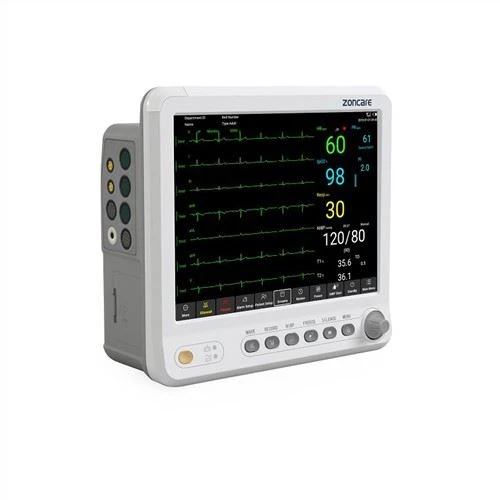
As we all know, ECG monitors have a good monitoring effect on heart diseases, but we don’t know what specific items can be detected, so today I will introduce to you what items the ECG monitors can monitor. Let's take a look!
1. Heart rate monitoring
The ECG monitor can be given this name because the monitor can monitor the heart rate of the human body, and the heart rate can reflect many convenient problems. Through monitoring, abnormalities in the heartbeat can be found in time, and whether There is a dangerous heart rate, and at the same time the cardiac output can be judged to see if there is a prelude to cardiac arrest.
2. Respiratory monitoring
The use of the ECG monitor can also monitor the patient's breathing, so as to understand the breathing rate and type of breathing of the monitored person. Through the increase or decrease of the respiratory rate to understand whether there is a respiratory function disorder. At the same time, it can also understand whether the patient has abnormal breathing types such as asthmatic breathing, tight breathing, irregular deep and shallow breathing, and snoring breathing.
3. Pulse oxygen saturation detection
Clinically, it is very meaningful to use an ECG monitor to monitor pulse oxygen saturation. Because pulse oxygen saturation passes through the peripheral extremity circulation, it can measure the blood's ability to carry oxygen. In the process of treating cardiopulmonary diseases, real-time monitoring of pulse oxygen saturation can reflect whether the disease is getting better or worse. Use ECG monitors Detection of it can detect hypoxemia and the outcome of the disease early, so as to more effectively prevent or reduce accidental deaths caused by hypoxia.