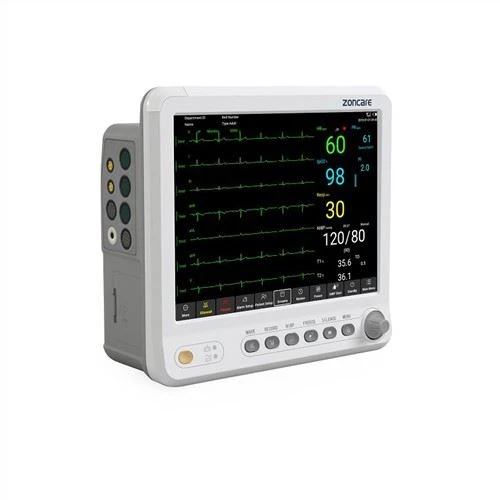
The ECG monitor understands the patient's condition in real time through the display screen, and can achieve reliable data for observing the condition. However, there are many points to pay attention to when using the monitor. Let us understand together.
1. Use 75% alcohol to clean the surface of the measurement site. The purpose is to remove the stratum corneum and sweat stains on the human skin to prevent poor contact of the electrode pads.
2. Clamp the placket clip on the lead wire to the hospital bed and fix it. And instruct patients and family members not to pull the electrode wires and lead wires.
3. The electrode is easy to fall off after long-term use, which affects the accuracy and quality of monitoring. If necessary, replace the electrode pads and the sticking part, and pay attention to clean and disinfect the skin.
4. The plug of the blood oxygen probe and the "blood oxygen" jack on the host panel must be inserted in place. Otherwise, it may not be possible to collect blood oxygen information and display the blood oxygen value and pulse value. If the patient’s finger feels uncomfortable after prolonged blood oxygen monitoring, another finger should be replaced for monitoring.
5. Patients and medical staff should not bump or pull the probe and lead to prevent damage and affect the use.
6. The position of the blood oxygen probe should be separated from the blood pressure measurement arm, because the blood flow is blocked when measuring blood pressure, the blood oxygen cannot be measured or the measurement value is inaccurate.
7. More cuffs should be prepared, the quantity is sufficient, the model is complete, and the sterilization is available. Be dedicated.
8. After unfolding, the cuff should be wrapped around 1-2cm above the patient's elbow joint, and the tightness should be able to insert 1-2 fingers. Too loose pressure may cause high blood pressure; too tight pressure may cause low blood pressure, and make the patient feel uncomfortable, affecting the recovery of blood pressure in the arm. The cuff catheter should be placed in the brachial artery.
9. When measuring pressure, the position of the cuff on the arm should be flush with the heart, and the patient should be instructed not to speak or move when the blood pressure cuff is inflated.
10. Avoid taking measurements on the infusion or on the limbs with malignant trauma, otherwise it will cause blood backflow or bleeding from the wound.
11. Patients under continuous monitoring must relax 1-2 times per shift. When the condition permits, it is best to change the monitoring site every 6-8h. Prevent unnecessary skin damage to the patient caused by continuous monitoring of the same site.
12. In order to prevent peculiar smell and increase comfort, the cuff should be replaced and cleaned weekly, and disinfected at any time when it is contaminated.