



Hey there! As a supplier of 12 Channel ECG Machines, I'm super stoked to share with you how these nifty devices play a crucial role in detecting cardiac ischemia.
First off, let's get a basic understanding of what cardiac ischemia is. Simply put, it's a condition where there's a reduced blood flow to the heart muscle. This can happen due to a variety of reasons, like a blockage in the coronary arteries. When the heart doesn't get enough oxygen-rich blood, it can lead to chest pain (angina), and in severe cases, a heart attack.
Now, let's dive into how a 12 Channel ECG Machine comes into the picture. These machines are like the detectives of the medical world, helping doctors uncover clues about what's going on inside the heart.
How It Works
A 12 Channel ECG Machine records the electrical activity of the heart from 12 different perspectives. Each channel provides a unique view of the heart's electrical signals. This multi-channel approach is way more comprehensive than a single-channel ECG.
The machine uses electrodes that are placed on the patient's chest, arms, and legs. These electrodes pick up the electrical impulses generated by the heart as it beats. The signals are then transmitted to the machine, which analyzes and displays them on a screen.
The 12 channels are divided into two main groups: limb leads and chest leads. The limb leads (I, II, III, aVR, aVL, aVF) give information about the heart's electrical activity in the frontal plane. The chest leads (V1 - V6) provide details about the electrical activity in the horizontal plane.
Detecting Cardiac Ischemia
So, how does this all help in detecting cardiac ischemia? Well, when there's a lack of blood flow to a particular part of the heart, the electrical activity in that area changes. These changes can be detected by the 12 Channel ECG Machine.
One of the key indicators of cardiac ischemia is ST-segment changes. The ST segment is the part of the ECG waveform that represents the time between the end of the QRS complex (ventricular depolarization) and the beginning of the T wave (ventricular repolarization). In a healthy heart, the ST segment is usually at the baseline. But in cases of cardiac ischemia, the ST segment can either elevate or depress.
ST-segment elevation is often associated with acute myocardial infarction (heart attack). It indicates that there's a complete blockage in one of the coronary arteries, and the heart muscle is dying. On the other hand, ST-segment depression is more commonly seen in stable angina or non-ST-segment elevation myocardial infarction (NSTEMI). It suggests that there's a partial blockage in the coronary arteries, and the heart muscle is not getting enough oxygen.
Another important finding in cardiac ischemia is T-wave changes. The T wave represents the repolarization of the ventricles. In cases of ischemia, the T wave can become inverted or flattened. These changes can also help doctors diagnose and monitor the progression of cardiac ischemia.
Advantages of a 12 Channel ECG Machine
There are several advantages of using a 12 Channel ECG Machine for detecting cardiac ischemia.
Firstly, the multi-channel approach provides a more detailed and accurate picture of the heart's electrical activity. This allows doctors to detect even subtle changes that might be missed by a single-channel ECG.
Secondly, 12 Channel ECG Machines are relatively easy to use. They can be operated by trained medical staff in a variety of settings, including hospitals, clinics, and even ambulances.
Thirdly, these machines can provide real-time results. This is crucial in emergency situations, where quick diagnosis and treatment can save lives.
Our Product Range
As a supplier, we offer a wide range of 12 Channel ECG Machines to meet the diverse needs of our customers.
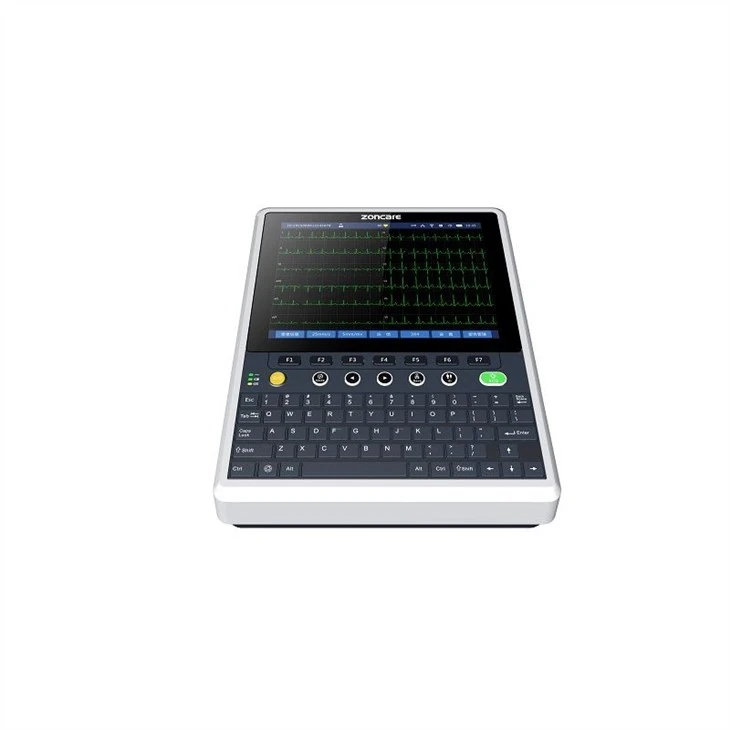
We have the Wirless 12 Channel ECG Machine. This machine is great for on-the-go use. It's lightweight and portable, allowing doctors to take it with them to different locations. The wireless feature also makes it easier to set up and use, without the hassle of cords and cables.
We also have the Dicom Supported 12 Channel ECG Machine. This machine is compatible with the DICOM (Digital Imaging and Communications in Medicine) standard. This means that the ECG data can be easily shared and integrated with other medical imaging systems, making it more convenient for doctors to analyze and manage patient information.
And then there's the Classic 12 Channel EKG Machine. This machine is a reliable and cost-effective option. It has all the essential features for detecting cardiac ischemia and is suitable for both small clinics and large hospitals.
Conclusion
In conclusion, a 12 Channel ECG Machine is an invaluable tool in the detection of cardiac ischemia. It provides a detailed and accurate picture of the heart's electrical activity, allowing doctors to diagnose and treat the condition in a timely manner.
If you're in the market for a 12 Channel ECG Machine, we'd love to hear from you. Whether you're a hospital, a clinic, or an individual looking for a reliable ECG machine, we have the right product for you. Contact us to start a conversation about your needs and how we can help.
References
- American Heart Association. (2023). What is Ischemic Heart Disease? Retrieved from [AHA official website]
- Mayo Clinic. (2023). Electrocardiogram (ECG or EKG). Retrieved from [Mayo Clinic official website]
- European Society of Cardiology. (2023). Guidelines for the management of acute coronary syndromes in patients presenting without persistent ST-segment elevation. European Heart Journal.


